A Little Postcard Inspiration


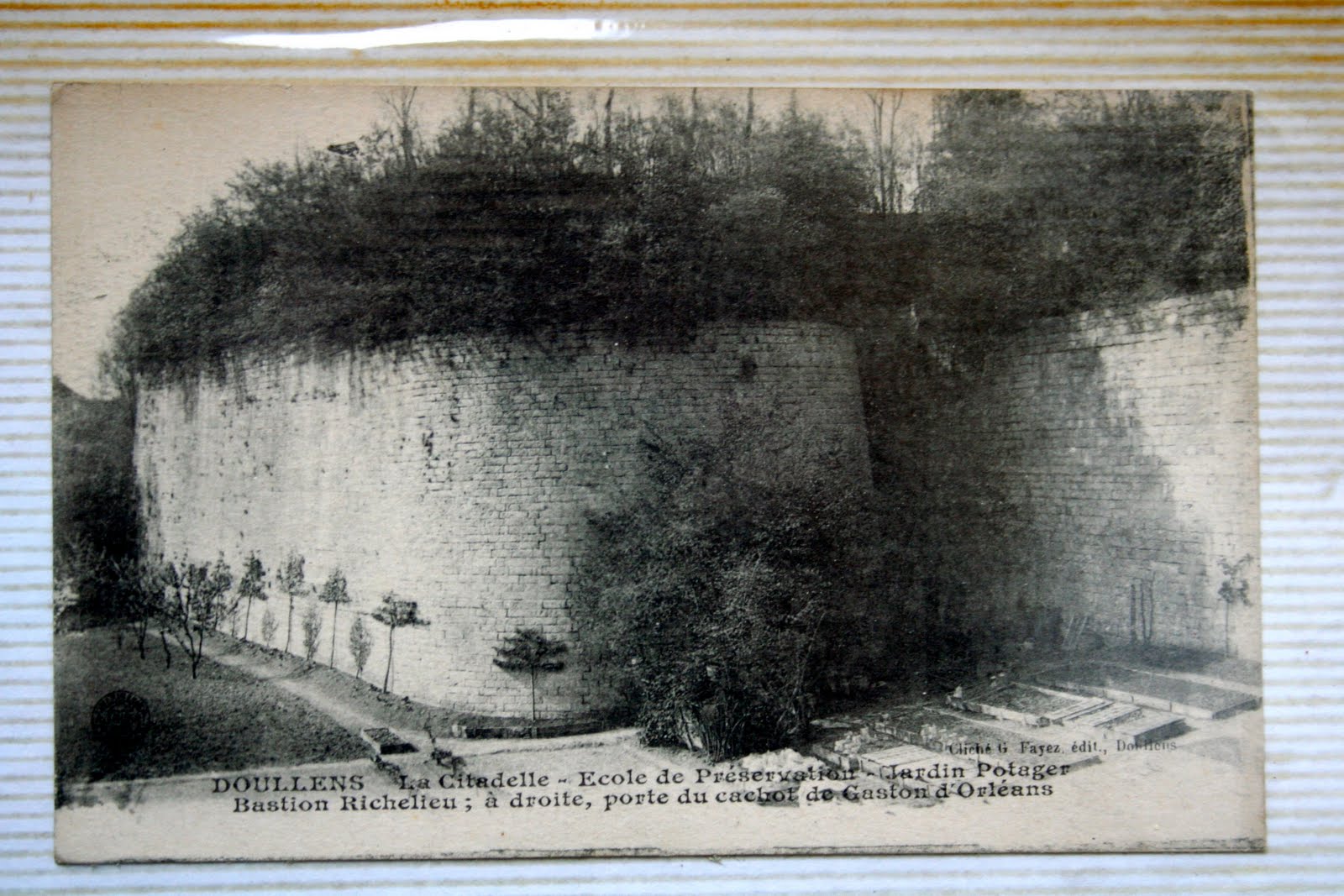
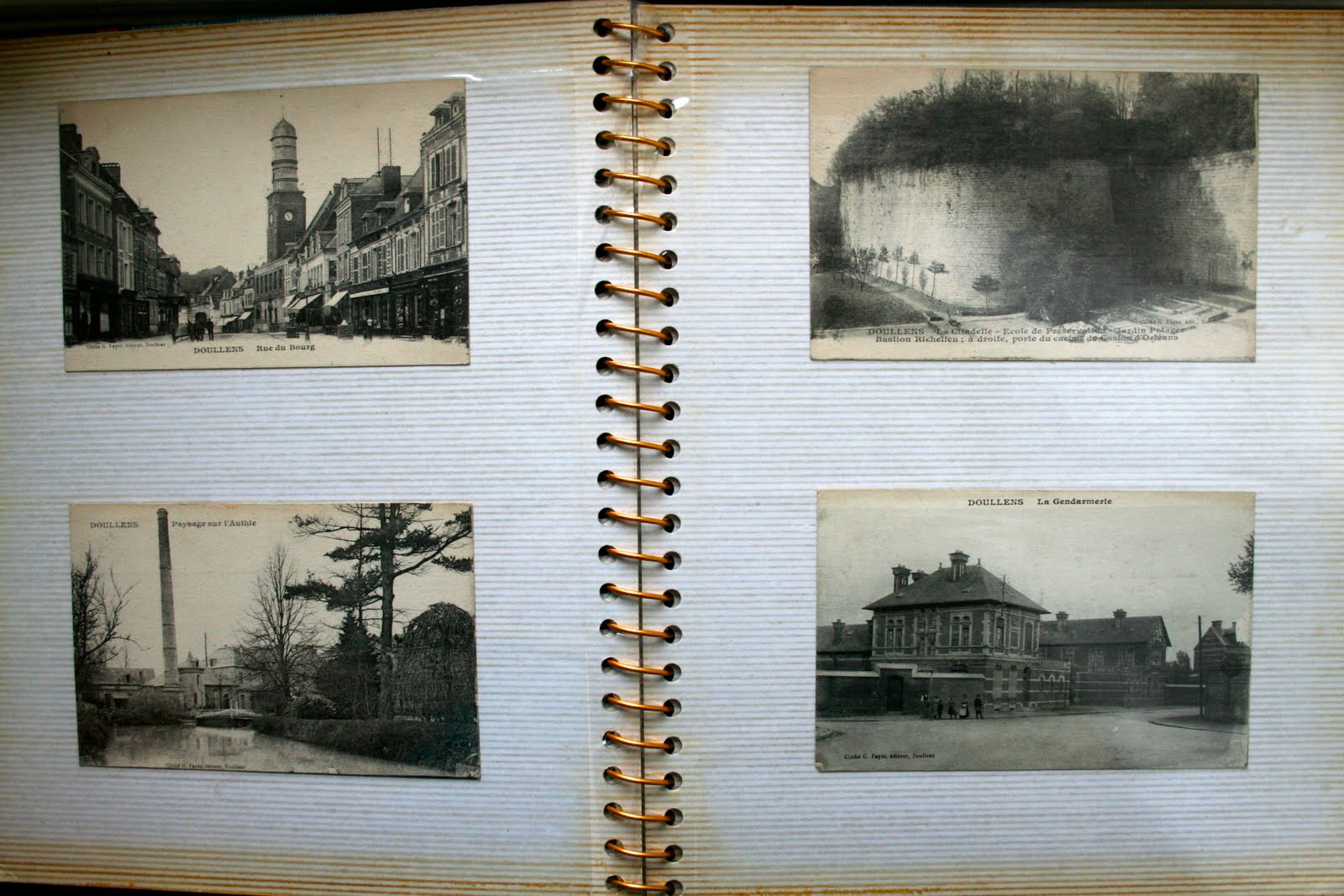
I found this postcard collection in a charity shop in Brixton. They are lovingly arranged into photo album and mostly date from 1910. They are from Germany, France and Belgium and in total there are 39 cards.


Another addition to the celebrity series still working on it, this was a little harder than with the Charles and Diana, Hitler and Cowells faces are quite different. Cowells face is much longer than Hitlers.

Smocking with Lizzie Finn


My craft to work with for the project was smocking which I was awarded randomly. We were required to make two pieces of typography using out craft. The model above is a fine example of how to wear a smock. Smocking is an embroidery technique used to gather fabric so that it can stretch. Before elastic, smocking was commonly used in cuffs, bodices, and necklines in garments where buttons were undesirable. Smocking developed in England and has been practiced since the Middle Ages and is unusual among embroidery methods in that it was often worn by laborers. Other major embroidery styles are purely decorative and represented status symbols. Smocking was practical for garments to be both form fitting and flexible, hence its name derives from smock — a farmer's work shirt. Smocking was used most extensively in the eighteenth and nineteenth centuries.

Inspired by two smocking books I got form the Chelsea library I got smocking . . .


Step one was to pleat a very long piece of calico fabric.


Then came the needle and thread.


Paper Curating


In collaboration with MA's on ISD and CPCW we created a proposal for an exhibition entitled "The Banality of Everyday".

"‘Small gestures in specific places’ – this could be the coda for the time when the place for art is on the move. Today the form of art bends to the circumstance, and the boundary with the everyday blurs. The placement of small gestures in specific places can at first glance be continuous with our daily stride, sight, breath, touch and reach.”
- Nikos Papastergiadis, Spatial Aesthetics (2006) p.138

The Banality of Everyday examines not only the invasion of the private territory, where the basic and monotonous gestures of “way of operating” are practiced and repeated everyday, but also potentiality of generating personal history and narrative under the certain rules and systems of the space. As the platform of this in-progress project, the flat room will be inhabited by solitary participants for a certain duration based on provided objects which have particular functions. Everyday life seems banal, quotidian and ordinary within generic socio-cultural codes. However, it is continuity of the uncanniness as being familiar and unfamiliar at the same time. Every time confronting a basic demand for safety, security and comfort, we are constructing everyday activities through various tactics. The project intends to bring an artist, Alison Balance, as the last visitor of the room. To terminate the project, having the creative freedom to the space, Balance will explore performative reactions in response to the space that have been constructed by audiences.

Within the multiple trajectories and the distinction between the foreign and the common, this site-specific practice will be a globally ongoing project which investigates the space’s potential with the diverse cultural production in everyday surroundings.

Working with my fellow GDC student Jane we brainstormed ideas of promoting and discussed the practicalities of the project. We needed to have a website for prospective participants to get information and book their time in the room. The website would act as an archive where documentation of the exhibition would be available. It would also allow us to stream the closing performance by artist Alison Balance. High-lighting the ordinary became the aspect of the project we would use in our work. The initial idea was to create a viewing apparatus in the from of a postcard with the image of two hands creating a viewfinder. The holder is free to create compositions and look at things carefully in a manner which maybe they wouldn't normally. Taking this apparatus we made a viral video following the use of the postcard. As we envisaged the exhibition as one which would travel to several cities, the viral would be one of a series made in each city. We also created posters which feature the postcard.

View the website
here

Fanzine with Ben


The brief entailed creating a fanzine on our research topic. I am currently reading the work of Michael Foucault on power. The effect of a tendency to disindividualise power is the perception that power resides in the machine itself rather than in its operator. Power has its principle not so much in a person as in a certain concerted distribution of bodies, surfaces, lights, gazes; in an arrangement whose internal mechanisms produce the relation in which individuals are caught up. This theory can be applied to relationships also and if we consider the relationship/marriage as the institution/machine. Prince Charles and Lady Diana is the first of a celebrity series I intend on doing on the subject.

Workshop with Mary and Asli

As part of our work shop Mary and Asli gave us a list of tasks of which we had to complete at least three. 

Ask the first stranger you see outside the building what she/he is feeling: I asked a girl coming from the Tate toward the college how she what she was thinking 'i'm thinking about my work' she said.

Sit on a bench and write on a piece of paper as many different words as you can. red, space, drip, cold, breeze, ocean, air, smoke, stone, squeek, spray, stride, square, open, time, birds, thought, crown, two, runners, light, beard, umbrella, fabric, lyric, presence, isolation, company (I sat on a bench looking out on the courtyard of the college)

Follow someone until you learn something about them/her: I followed a man wearing a peak hat and a stripy blue scarf into the Chelsea cafe - he takes his coffee with milk and no sugar.

Leave a note for someone: I left a note in the canteen saying 'To whoever sits hereDear Diner, I hope you enjoy your meal today and you have a prosperous day ahead, lots of love xxx.' I don't think anybody actually read the note, I watched for quite a while and people looked a intimidated by the thought that maybe they were under surveillance so I got out from under the table I was hiding under and put away my binoculars feeling a little defeated!

The Solution

I thought that the answers would lend themselves to a narrative so I decided to combine two of the answers to create a spontaneous narrative. So using the man that I followed into the coffe shop as a main character, I built a small story incorporating the words I had written down whilst on the bench. I laid this out in a simple typographical form that enhanced the content of the composed story. 


Influences with Anna Gerber


Our third project named influences required me to explore my influences, look at who or what provokes, inspires and informs my working methods and research processes. The point was to to raise my awareness about my own influences. To look beyond myself and draw from experiences, contexts, impressions outside of myself. We were encouraged to explore and investigate those influences in different ways. We were required to create a list of five of our influences and mine are as follows:

  • The work of visual artist Gorden Young
  • Africa : the colour, vibrance and beautiful hand-rendered signage
  • Film director Ed Wood: hailed as the worst director of all time
  • The Arts and Crafts Ideal
  • The work of Steve Mc Queen

I then chose one of my influences to create work that expressed how my influence made me feel. I chose Gordon Young. He is a visual artist who focuses on creating art for the public domain. His work ranges from sculptures to typographic pavements for places as disrelated as government headquarters and village squares. The common denominator for all projects is the basis of relevance to the surroundings.


I thought about what it was about his work that attracted me to it and asked myself how the work made me feel as a viewer. As I am interested in typography, I enjoy the way Young creates public art using typography. He captures the essence of his subject, and creates a beautiful relationship between the art and the environment it is placed in. He embraces his environment and uses it to his advantage. I also enjoy the tactility of his work.

In creating my own piece of work I endeavored to create the same feelings. My criteria were, the item should be sensitive to its environment - it should look like it belongs, plain and simple, and it should evoke a feeling of beauty. I decided to make an installation in our classroom. By using sheets of clear plastic and super-glue I created a rain effect on the window of out classroom. I feel this was a subtle and successful solution that fulfilled the criteria I set myself.


Walter Benjamin Project with Jonathan Griffin

‘The Work of Art in the Age of Mechanical Reproduction’ (1935) by Walter Benjamin remains one of the most influential cultural texts of the modern era.
The text, although written more than 70 years ago, is still relevant today, and contains a wealth of ideas and reflections on the modern era that continue to inspire and excite new generations of readers. The text is particularly relevant in the fields of graphic design, moving image and digital media.

"The project will require you to interpret the text and
develop a personal response using a blend of visual,
analytical and communication skills. There are no
limits to the media you may choose to use."

Benjamin used the word "aura" to refer to the sense of awe and reverence experienced by a viewer when in the presence of unique works of art. Benjamin believed that this aura lies not in the object itself but rather in external attributes such as its known line of ownership, its restricted exhibition, its publicised authenticity, or its cultural value. With the advent of art's mechanical reproducibility, and the development of forms of art (such as film) in which there is no actual original, the art is to a mass audience, leading to a shattering of the aura.

One part of the essay that particularly appealed to me was a passage about acting. Where the actors attainment of aura is discussed. Benjamin also believed that the same principal of aura applied to acting - if you are in the audience of a theatre you are in the presence of the actors aura but that the same aura could not be transfered onto film. For aura is tied to his presence; there can be no replica of it. The aura which, on the stage, emanates from the actor and cannot be separated for the spectators from that of the actor. He quotes Pirandello:

“The film actor,” wrote Pirandello, “feels as if in exile – exiled not only from the stage but also from himself. With a vague sense of discomfort he feels inexplicable emptiness: his body loses its corporeality, it evaporates, it is deprived of reality, life, voice, and the noises caused by his moving about, in order to be changed into a mute image, flickering an instant on the screen, then vanishing into silence .... The projector will play with his shadow before the public, and he himself must be content to play before the camera.”

This is the area of the text I decided to pursue. I wanted to make a documentary (of sorts!) of the struggle that an actor has with himself. The Actor changes during the piece morphing into entirely different species, before returning to himself. The set was created using mundane household items. The lighting is quite dark in places as I wanted to create a tense atmosphere. I also chose music that created tension, Ensurance Trap by Michael Andrews and recorded Ulrick reciting an edited version of the All the Worlds a Stage speech from As You Like It. It was then edited so it would not be recognisable to the viewer. I used dominoes to represent ritual but also the unpredictable nature of acting, they are spontaneously arranged without effort but with the same ease they are knocked down by the Actor at the end of the piece. 


Stills from the stop-motion animation


The finished piece

(the sound exported out of sync with the film - im still trying to fix it!)